





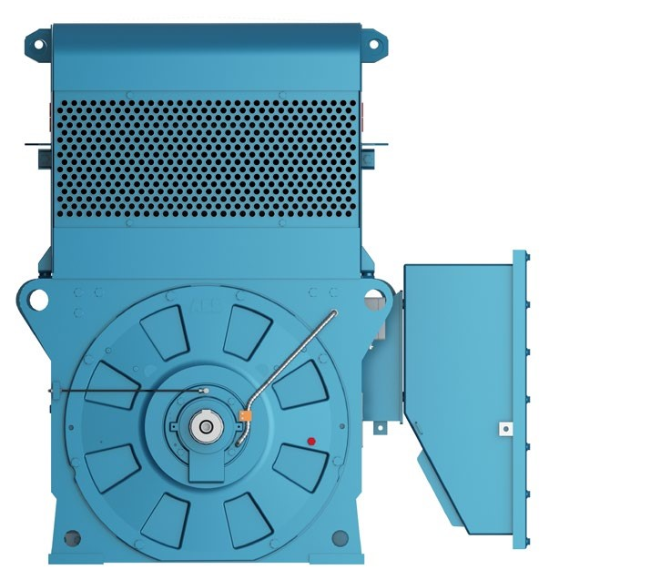
Wound Rotor Motor vs Squirrel Cage: Key Differences, Advantages & Selection Guide
When engineers compare wound rotor and squirrel cage induction equipment, they often reference dc motor vs ac motor performance gaps, alongside core indicators of starting torque, current control, maintenance expense and long-term efficiency. Both rotor types belong to alternating current motor systems, widely categorized as standard ac motor, separate from synchronous ac motor and synchronous electric motors series. Unlike synchronous motor and synchronous ac motors that run at exact synchronous speed, these two induction ac motors rely on slip to generate torque and serve diverse industrial drives. Their structural layout and operating performance differ greatly, making proper selection critical to system stability, energy consumption and downtime control. This guide breaks down their distinctions, pros, cons and application matching rules.
Basic Introduction of Two Mainstream AC Motor Types
1. Squirrel Cage AC Motor
It is the most widely adopted ac motor across all industries. Its rotor consists of aluminum or copper conductive bars short-circuited by end rings, forming a cage-shaped structure.
Core merits: simple sturdy construction, low maintenance, high operating efficiency; limitations include moderate starting torque and high inrush starting current.
Working principle: Alternating current passes through stator windings to create a rotating magnetic field, which induces current in rotor bars and outputs driving torque. The sealed rotor circuit cannot connect external regulators, limiting startup adjustment but boosting reliability, outperforming many synchronous electric motors in continuous light-load operation.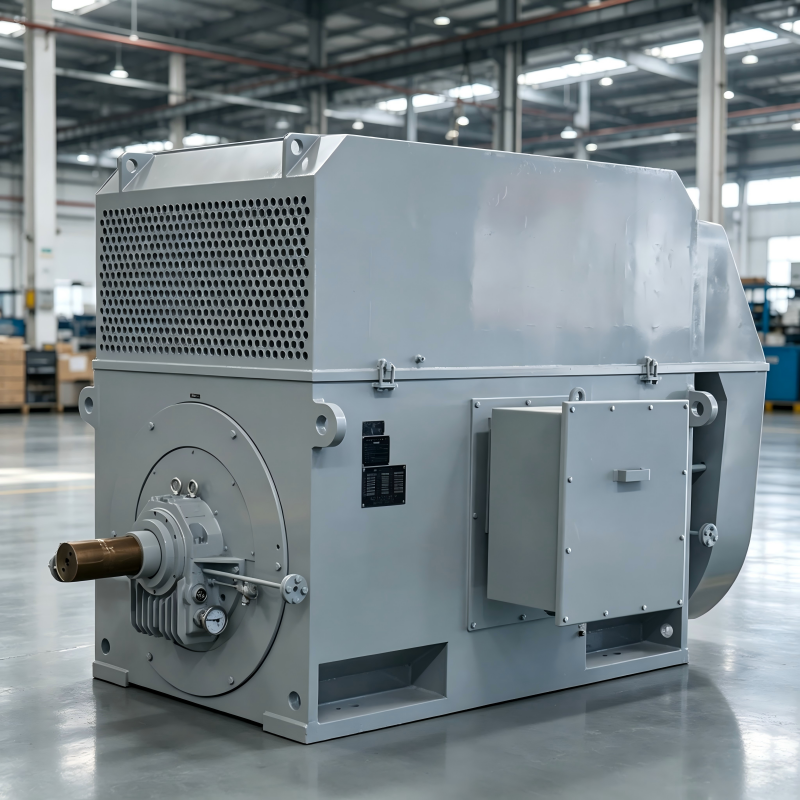
2. Wound Rotor AC Motor (Slip Ring Motor)
This ac motor equips the rotor with windings identical to stator layout, connected to shaft-mounted slip rings. Operators can link external resistors via brushes for performance tuning, a feature unavailable in standard squirrel cage ac motor, synchronous motor or synchronous ac motors.
Core merits: high starting torque, controllable low starting current, flexible startup speed and torque adjustment; drawbacks include complicated assembly and frequent maintenance demands.
Working principle: The stator generates rotating magnetic field as other ac motor models. Extra resistance is added to the rotor circuit at startup to lift torque and cut shock current; resistance is gradually removed once the machine accelerates to rated speed.
Structural Comparison Table
| Feature | Squirrel Cage AC Motor | Wound Rotor AC Motor |
|---|---|---|
| Rotor Design | Conductive bars + short-circuit end rings | Three-phase wound coils with slip rings |
| External Rotor Access | No | Yes |
| Complexity | Simple | Complex |
| Maintenance Workload | Low | High |
| Initial Purchase Cost | Lower | Higher |
Performance Comparison
Starting Torque & Current
Squirrel cage ac motor brings 5–8 times rated starting current with average torque; extra soft starters or VFDs are required for optimization. Wound rotor ac motor uses external resistance to realize high torque and restrained starting current, ideal for crushers, heavy conveyors and hoists. When doing dc motor vs ac motor evaluation, induction ac motors beat DC units in long-run efficiency, while synchronous electric motors excel in constant-speed precision scenarios.
Speed Regulation
Squirrel cage ac motor mainly relies on VFD or pole changing for speed adjustment, with limited natural speed variation. Wound rotor ac motor tunes startup speed via rotor resistance, yet continuous precise speed control still depends on VFDs. The popularity of frequency converters narrows the historical speed advantage of wound rotor ac motor against synchronous motor and synchronous ac motors.
Efficiency & Energy Loss
Under steady running conditions, squirrel cage ac motor achieves higher efficiency. Wound rotor ac motor produces extra power loss from slip rings and rotor resistance, unsuitable for non-stop long-term operation, whereas well-designed synchronous ac motors maintain high efficiency at full load.
Maintenance & Reliability
Squirrel cage ac motor has no brushes or slip rings, requiring minimal maintenance and adapting to harsh industrial environments. Wound rotor ac motor’s wearable brushes and slip rings need routine inspection and replacement, raising downtime risks. Synchronous electric motors also require regular checks for excitation systems.
Full Lifecycle Cost
Squirrel cage ac motor carries lower upfront price and cheaper long-term maintenance fees, delivering better total cost of ownership for standard working conditions. Wound rotor ac motor costs more to buy and operate.
Typical Application Scenarios
Squirrel Cage AC Motor
Pumps, fans, compressors, HVAC, machine tools and general industrial drives with normal starting loads. It replaces most synchronous motor and synchronous ac motors in low-precision continuous production lines.
Wound Rotor AC Motor
Cranes, ball mills, crushers, elevators and heavy conveyors in mining, metallurgy, cement and port sectors with high-inertia heavy startup loads. Changli Electric supplies customized squirrel cage and wound rotor ac motor to match customer torque and load demands.
Industry Trend: Will Wound Rotor AC Motor Be Phased Out?
Wide adoption of VFDs enables squirrel cage ac motor to deliver smooth soft start, precise speed regulation and energy saving, realizing performance once exclusive to wound rotor ac motor. Even compared with synchronous electric motors and synchronous ac motors, VFD-driven squirrel cage ac motor offers more cost-effective flexible control. Nevertheless, wound rotor ac motor remains irreplaceable for ultra-high-power and huge inertia equipment. Changli Electric manufactures both ac motor types to serve heavy industry clients.
Pros & Cons Summary
Squirrel Cage AC Motor
Advantages: Simple structure, low cost, high efficiency, little maintenance, strong durability
Disadvantages: Large starting current, limited torque control without VFD
Wound Rotor AC Motor
Advantages: High starting torque, adjustable low starting current, tunable startup performance
Disadvantages: Frequent maintenance, high procurement cost, complicated supporting system
Motor Selection Guidelines
- Load property: High inertia heavy loads → wound rotor ac motor; regular loads → squirrel cage ac motor
- Startup frequency: Frequent heavy startup → wound rotor ac motor; continuous stable operation → squirrel cage ac motor
- Budget constraints: Pick squirrel cage ac motor with limited funds
- Maintenance manpower shortage: Choose squirrel cage ac motor
- High-precision continuous speed regulation: Squirrel cage ac motor matched with VFD, or synchronous motor / synchronous ac motors
FAQ
- Best ac motor for heavy startup loads? Wound rotor ac motor, which generates high torque and suppresses starting current via external resistance.
- Higher efficiency choice? Squirrel cage ac motor runs more efficiently under steady operation due to simpler rotor structure and fewer mechanical losses, superior to wound rotor ac motor and comparable to standard synchronous electric motors.
- Can squirrel cage ac motor replace wound rotor models? Yes for most modern facilities with VFD configuration; ultra-high-power special heavy-duty equipment still needs wound rotor ac motor. When comparing dc motor vs ac motor, induction ac motors dominate general industrial drives.
- Why higher maintenance for wound rotor ac motor? Brushes and slip rings suffer constant abrasion and need periodic inspection and replacement.
- Most popular ac motor today? Squirrel cage ac motor takes the largest market share thanks to durability, high efficiency and low lifecycle cost.
Conclusion
The selection between wound rotor and squirrel cage ac motor hinges on actual working conditions. Squirrel cage ac motor dominates mainstream industrial markets for its simple structure, stable performance and economic cost, suitable for scenarios without ultra-high starting torque demands. Wound rotor ac motor retains unique strengths in heavy-load, high-inertia production lines. Synchronous motor and synchronous ac motors are selected separately for constant-speed high-precision processes. As motor control technology evolves, the performance gap between different ac motor types keeps shrinking. Proper motor matching with load, environment and operation plans guarantees long-term efficient and stable running, whether choosing induction ac motor or synchronous electric motors.
Tags: Industry News, Hot Motor Tags
ac motor, synchronous ac motor, synchronous electric motors, synchronous ac motors, synchronous motor, dc motor vs ac motor
