





Why Choose Slip Ring Motors: Key Advantages and Applications
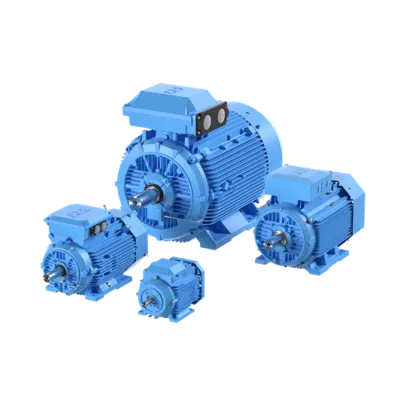
A slip ring motor is classified as an asynchronous motor because its rotor never reaches the exact synchronous speed of the rotating magnetic field. Unlike standard squirrel cage motors, the slip ring motor features a wire-wound rotor. This rotor consists of a cylindrical laminated steel core with semi-enclosed recesses at the outer boundary, designed to accommodate a three-phase insulated winding circuit.
Why Use Slip Rings?
In an induction motor, "slip" is the difference between the stator's magnetic flux speed and the rotor's actual speed; this difference is essential for torque production. A slip ring acts as an electromechanical device (also known as a rotary electrical interface or collector ring) that transfers power and signals from a stationary part to a rotating part. By eliminating dangling wires and allowing for external circuit connections, slip rings enhance overall system operation and motor performance.
Benefits of Slip Ring Motors
Slip ring motors are widely utilized in industrial applications requiring high starting torque and variable speed control. Their unique design provides several distinct advantages:
- High Starting Torque and Low Starting Current: By inserting external resistance into the rotor circuit, these motors can generate massive starting torque while keeping the initial current draw low.
- Adjustable Speed: The operating speed can be easily regulated by varying the external resistors connected to the slip rings.
- Smooth Acceleration: They offer high overload capacity and smooth acceleration under heavy loads without abnormal heating during startup.
- Robust Performance: Slip ring motors are known for safe, reliable operation, low noise, and low vibration.
Disadvantages of Slip Ring Motors
Despite their benefits, slip ring motors have certain drawbacks compared to squirrel cage motors:
- Higher Costs: Initial purchase and maintenance costs are higher due to the complex construction involving slip rings, carbon brushes, and short-circuiting devices.
- Poor Speed Regulation: When relying solely on external resistors for speed control, speed regulation can be imprecise.
- Lower Efficiency and Power Factor: They generally exhibit lower efficiency and a lower power factor (especially at light loads) compared to squirrel cage induction motors.
- Voltage Sensitivity: Their performance can be sensitive to fluctuations in the supply voltage.
Applications of Slip Ring Motors
Because slip ring motors provide significantly higher starting torque than standard induction motors, they are the preferred choice for heavy-duty machinery. Common applications include:
- Heavy Lifting and Transport: Cranes, hoists, elevators, winches, and conveyors.
- High-Inertia Loads: Ball mills, coal mills, rolling mills, crushers, and large ventilation fans.
- Capacity-Limited Grids: Situations where the electrical feeder capacity is insufficient to handle the high inrush current of a squirrel cage motor.
- Synchronous "Electric Shaft" Drives: Systems requiring precise coordination, such as compressors, sugar mills, textile machines, and wire drawing machines.
Conclusion
Slip ring motors remain a crucial component in numerous industrial environments. By offering a unique combination of high starting torque, adjustable speed control, and robust durability, they effectively meet the rigorous demands of heavy-duty applications. From cranes and elevators to industrial mixers and crushers, slip ring motors ensure efficient, stable, and reliable operation where standard motors fall short.
