


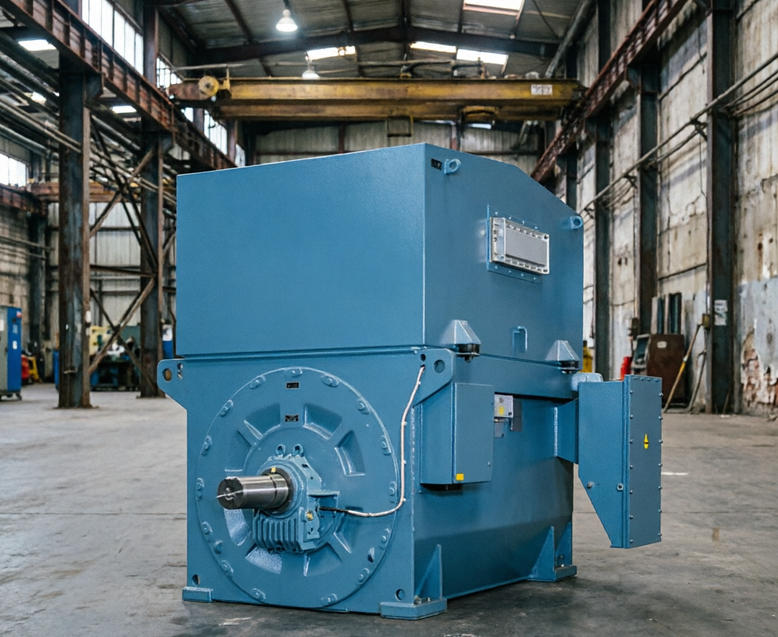
What is a Squirrel Cage and How Does it Differ from an Induction Motor?
To understand what is a squirrel cage motor, it helps to first recognize that it is a specific type of induction motor. Induction motors, in general, are electric motors that convert electrical energy into mechanical energy using electromagnetic induction. They are a staple in both industrial and household applications due to their reliability, simplicity, and efficiency.
What is a Squirrel Cage? (The Rotor Construction)
The defining characteristic that answers what is a squirrel cage lies in its rotor construction. Unlike other motors, the rotor in a squirrel cage motor consists of a cylinder of metal bars that are shorted together at each end by metal rings. This distinct, cage-like structure gives the motor its name.
Instead of being connected to an external power source, the rotor is induced to rotate purely by the magnetic field generated by the stator (the stationary part of the motor). Because of this rugged and simple design, squirrel cage motors are highly durable, cost-effective, and easy to maintain.
Squirrel Cage vs. General Induction Motors
While all squirrel cage motors are induction motors, not all induction motors are squirrel cages. The broader category of induction motors also includes wound rotor motors (which have more complex rotors and offer adjustable torque) and synchronous motors (which run at a fixed speed and require a separate rotor power source).
Here is a detailed comparison to highlight the differences:
| Feature | Squirrel Cage Induction Motors | Induction Motors (General Category) |
|---|---|---|
| Construction | Rotor made of aluminum or copper bars (the "squirrel cage") | Rotor construction varies (can be squirrel cage or wound rotor) |
| Rotor Type | Exclusively squirrel cage rotor | Squirrel cage or wound rotor |
| Starting Torque | Moderate, depending on the rotor bar design | Varies: squirrel cage is generally lower; wound rotor offers adjustable torque |
| Slip | Lower slip, typically 4-6% | Depends on load and type; squirrel cage has less slip than wound rotor |
| Maintenance | Low (no slip rings or brushes required) | Squirrel cage: low; Wound rotor: moderate (requires brush/slip ring maintenance) |
| Starting Method | Direct-on-line (DOL) or star-delta starting | Depends on type: DOL, star-delta, or rotor resistance (for wound rotors) |
| Efficiency | High, particularly at constant speeds | Generally high, but squirrel cage motors are typically more efficient |
| Applications | Fans, pumps, compressors, general-purpose machinery | Wide range: fans, cranes, conveyors, and heavy industrial drives |
| Cost | Lower cost due to simpler construction | Squirrel cage: affordable; Wound rotor: more expensive |
| Speed Control | Limited (requires a Variable Frequency Drive or VFD) | Wound rotors offer better native speed control options |
| Durability | Highly robust and durable for harsh conditions | Squirrel cage: high durability; Wound rotor: moderate |
| Noise | Generally quieter due to the simple rotor structure | Varies, but squirrel cage motors are often quieter |
Summary
Ultimately, if you are asking what is a squirrel cage motor, it is best defined as the most popular choice in the induction motor family due to its simplicity, ruggedness, and low maintenance. While the broader induction motor category includes wound rotor designs that provide flexibility for high-torque or variable-speed applications, the squirrel cage remains the go-to solution for standard, reliable mechanical power.
