





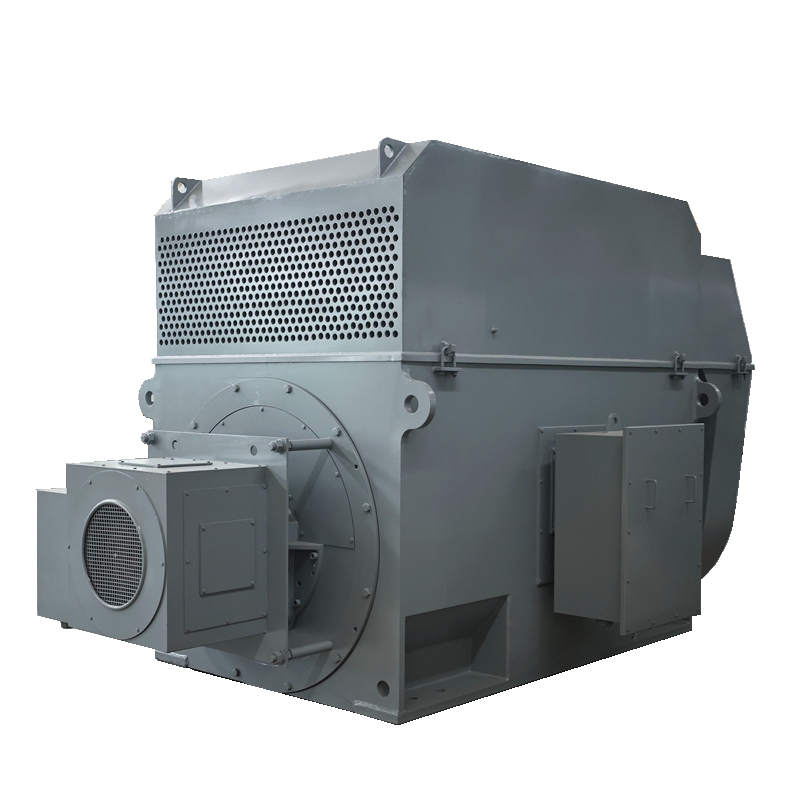
What Are the Parts of an AC Motor? A Beginner's Guide
An AC motor is a widely used machine in industrial, commercial, and residential applications. Its operation depends on the interaction between two main parts: the stator and the rotor. The stator is the stationary outer part, while the rotor is the rotating inner part connected to the motor shaft. Together, these parts create rotating magnetic fields that allow the motor to convert electrical energy into mechanical motion.
Main Parts of an AC Motor
The stator and rotor are the most important parts of an AC motor. The stator remains fixed and generates a rotating magnetic field when alternating current flows through its windings. The rotor receives energy from this magnetic field instead of being directly connected to an external power source. As the magnetic field changes, it induces current in the rotor, producing torque and causing rotation.
Stator
The stator is responsible for producing the rotating magnetic field needed for motor operation. It consists of a metal core, copper wire coils, and electrical interconnections. When AC voltage is applied to the stator windings, a magnetic field is created and rotates at synchronous speed.
In three-phase AC motors, the stator has three-phase windings placed 120° apart. These windings are mounted on a laminated iron core, which helps ensure smooth and continuous operation. The stator winding also acts as both the armature and the field winding in many AC motors.
Rotor
The rotor is the rotating part of the motor. Unlike DC motors, the rotor in an AC motor does not receive power directly from an external supply. Instead, it receives energy through electromagnetic induction from the stator’s rotating magnetic field.
There are two common rotor types:
- Squirrel cage rotor: This rotor has bars and end rings, usually made of aluminum or copper. The stator’s magnetic field induces current in the rotor bars, causing the rotor to turn.
- Wound rotor: This rotor has a laminated core with wire windings similar to the stator. The winding ends are connected to slip rings and brushes, allowing better control of speed and torque.
Squirrel Cage Rotor
The squirrel cage rotor is one of the most common rotor designs in AC motors. It consists of conductive bars connected by end rings, forming a cage-like structure. When the stator’s electromagnetic field changes, it induces current in the rotor bars. This induced current creates torque and causes the rotor to rotate.
The rotor does not rotate at exactly the same speed as the stator’s magnetic field. This speed difference is called slip. Slip is necessary because if the rotor rotated at the same frequency as the AC supply, no relative motion would exist, and the motor would not produce torque.
Wound Rotor
A wound rotor provides more flexibility for speed and torque control. Its windings are connected to slip rings mounted on the motor shaft. Brushes make contact with the slip rings, allowing external resistance or control devices to adjust motor performance.
Wound rotor motors are especially useful in applications that require precise control. By adjusting rotor resistance, operators can control starting current, torque, and rotation speed.
Types of AC Motors
AC motors are available in different types, including single-phase, three-phase, synchronous, asynchronous, brake, customized, and multi-speed motors. The main differences depend on the power supply and intended application.
Single-phase motors are commonly used in residential applications, while three-phase motors are more common in industrial environments. Most AC motors are induction motors, which produce torque through electromagnetic induction rather than direct electrical connection to the rotor.
Starting Methods
AC motors can be started using different methods depending on motor type and application. These methods help control starting current, reduce mechanical stress, and protect electrical systems.
Common starting methods include:
- Contactor or manual starter: Allows simple on/off control of motor power.
- Star-delta starter: Reduces starting voltage by connecting the stator windings in star configuration first, then switching to delta configuration.
- Auto-transformer starter: Limits initial current by reducing applied voltage during startup.
- Rotor impedance starter: Adds resistance to the rotor circuit through slip rings and brushes.
- Soft starter: Provides gradual acceleration and deceleration to reduce mechanical wear.
Conclusion
The parts of an AC motor work together to convert electrical energy into rotational motion. The stator generates a rotating magnetic field, while the rotor responds to this field by producing torque. Whether using a squirrel cage rotor or a wound rotor, AC motors provide reliable and efficient performance across many applications.
Understanding the parts of an AC motor makes it easier to select, operate, and maintain motors for residential, commercial, and industrial use.
