





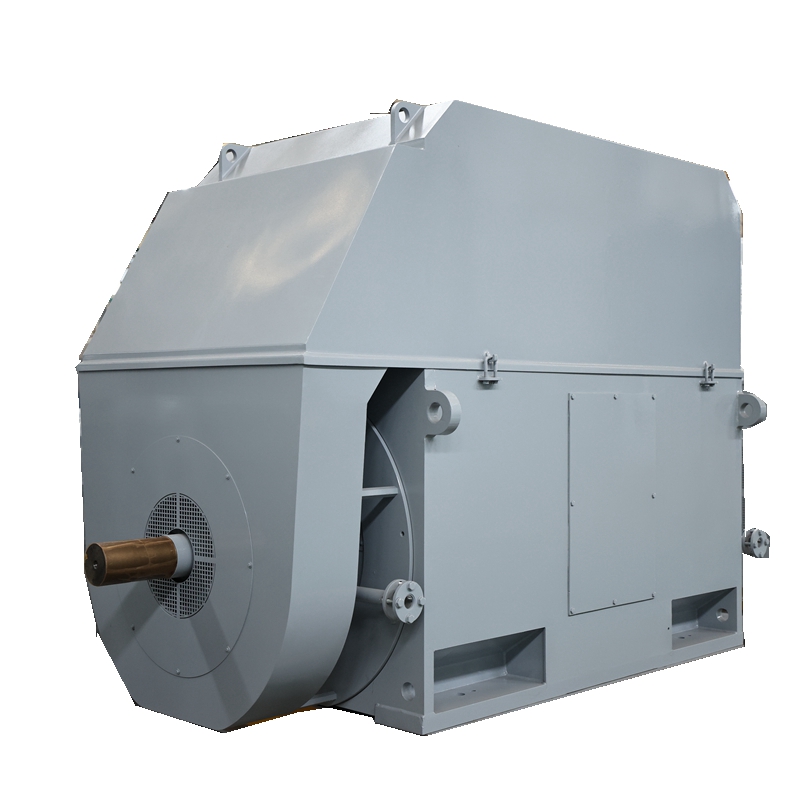
The Efficiency of Motors: What It Is and How to Enhance It
A motor is a machine that utilizes the interaction between the magnetic field in its windings and electric current to generate forces, thereby converting electrical energy into mechanical energy. Conversely, when this process is reversed to convert mechanical energy into electrical energy, the device functions as a generator. Electromagnetism is the fundamental phenomenon driving electric motors.
Understanding the Efficiency of Motors
The efficiency of motors, denoted by the symbol "η", is a critical performance metric defined as the ratio of the motor's output power to its input power. It can be mathematically expressed as:
Motor Efficiency (η) = Output Power / Input Power
or
η = Output Power / (Output Power + Losses)
Because no machine operates without losses, the output value is invariably less than the input value. The efficiency of motors essentially measures how effectively the device converts electrical input into useful mechanical work.
Improving the Efficiency of Motors
During the conversion of electrical energy into mechanical energy, motors incur various losses, including resistive (copper) losses, mechanical friction losses, core (iron) losses, and material-dependent losses. Several techniques can be employed to improve the efficiency of motors:
- Optimized Heat Dissipation: The motor frame provides mechanical protection and serves as the thermal interface. It transfers internal heat to the outer surface, where a fan promotes dissipation. Effective thermal management reduces heat-related losses and improves overall performance.
- Stator Winding Enhancements: The stator accounts for a significant portion of total losses. To mitigate resistive losses, high-efficiency models increase the mass of the stator winding, which lowers electrical resistance. For instance, premium motors may contain up to 25% more copper than standard-efficiency counterparts.
- Rotor Conductivity Improvements: Rotor losses are primarily driven by the motor's slip. Reducing this slip requires increasing the rotor's electrical conductivity. Utilizing die-cast copper rotors, which offer superior conductivity compared to traditional aluminum, is an effective method to minimize these secondary losses.
- Precision Lubrication: Mechanical losses are heavily influenced by bearing friction. Proper lubrication intervals depend on rated speed, bearing size, grease type, and temperature rise. It is crucial to avoid mixing different grease types, as incompatible lubricants can degrade performance, particularly in permanent magnet (PM) motors.
- Advanced Core Laminations: Core losses, caused by hysteresis and eddy currents, can be minimized by replacing low-cost carbon steel with silicon steel laminations. Furthermore, reducing the thickness of the laminations while increasing their length helps minimize flux density and core losses, thereby boosting the efficiency of motors.
