





Synchronous vs Asynchronous Motors: Typical Application Scenarios
Electric motors power countless industrial, commercial, and residential applications, with synchronous and asynchronous (induction) motors being two of the most widely‑adopted types. Each variant delivers unique characteristics, benefits, and optimal use‑cases based on application‑specific demands. This article compares synchronous vs asynchronous motor technologies, outlining their core differences and real‑world application scenarios.
How Synchronous vs Asynchronous Motors Work
Synchronous Motor
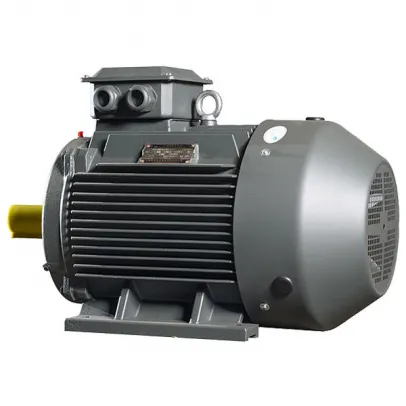
This is a typical AC synchronous motor designed to operate at synchronous speed. Within this machine, both the stator and rotor rotate at identical speeds to achieve synchronism. Its fundamental operating principle: once connected to a power supply, current passes through the stator windings to produce a rotating electromagnetic field. This magnetic field induces effects within the rotor windings and drives rotor rotation.
An external DC power supply is essential to lock the rotor’s direction and position to match that of the stator. Due to this magnetic coupling, the motor either runs at synchronous speed or cannot operate at all.
Key Features
- Precise Speed Control: Operating at constant speed dictated by supply frequency, synchronous motors suit scenarios where fixed‑speed performance is critical.
- High Efficiency: Free from slip‑related speed‑difference losses, they maintain high efficiency especially under heavy‑load conditions.
- Power‑Factor Regulation: Synchronous motors can adjust system power factor, improving overall energy efficiency and cutting operational utility expenses.
Asynchronous (Induction) Motor
The induction motor shares much of its working principle with the synchronous motor, with the major distinction being the absence of an external excitation supply. Fundamentally, asynchronous motors (induction motors) work on electromagnetic induction principles. No electrical energy is fed to the rotor via direct conduction, unlike DC‑type machines.
Since no external apparatus physically constrains the rotor, rotor speed is governed by fluctuating magnetic induction. The rotating stator magnetic field spins faster than the rotor itself. This speed mismatch between rotor and stator magnetic field gives rise to the “asynchronous” name; this speed differential is defined as slip.
Key Features
- Simplicity & Robustness: Induction motors feature simplified construction with fewer moving components, delivering high mechanical strength and low‑maintenance operation.
- Broad Scalability: Manufactured across an extensive size range, they power everything from small household appliances to large‑scale industrial machinery.
- Cost Competitiveness: Simple build and proven reliability make asynchronous motors generally more economical than synchronous alternatives.
Synchronous vs Asynchronous Motor: Advantages and Disadvantages
- A synchronous motor maintains constant speed determined by supply frequency and remains largely unaffected by load changes. By contrast, an asynchronous motor’s rotational speed drops as load increases.
- Synchronous motors support a wide range of power‑factor operation, covering both lagging and leading power‑factor states. Asynchronous motors always operate at lagging power factor, which can degrade significantly under light‑load conditions.
- Synchronous motors are non‑self‑starting, whereas asynchronous motors feature self‑starting capability.
- Unlike asynchronous motors, synchronous motor torque is relatively insensitive to supply‑voltage fluctuations.
- Synchronous motors require external DC excitation for startup; asynchronous motors function without external excitation sources.
- Synchronous motors come with higher procurement costs and greater system complexity. Asynchronous motors are lower‑cost and user‑friendly in deployment.
- Synchronous motors excel in low‑speed drive applications, supporting unity power‑factor tuning and high‑efficiency performance. Asynchronous motors perform better for operating speeds above 600 RPM.
- Supported by high‑power electronic converters generating ultra‑low frequencies, synchronous motors can achieve extremely low rotational speeds. They drive equipment such as crushers, rotary kilns and variable‑speed ball mills.
Synchronous vs Asynchronous Motor: Typical Application Scenarios
Synchronous Motor Applications
- Deployed within power stations for power‑factor optimisation. Operated in parallel with busbars, they commonly run in over‑excited mode to realise target power‑factor values.
- Adopted across manufacturing facilities containing large populations of asynchronous motors and transformers, to mitigate lagging power‑factor issues.
- Utilised in power‑generation plants to produce electricity at designated grid frequencies.
- Applied for transmission‑line voltage regulation by adjusting excitation levels.
Asynchronous Motor Applications
Asynchronous motors account for over 90 % of motors globally and see widespread deployment across diverse sectors, including:
- Centrifugal fans, blowers and pumps
- Compressors
- Conveyors
- Lifts and heavy‑duty cranes
- Lathes
- Petroleum, textile and paper‑processing plants
Motor Selection: Synchronous vs Asynchronous Motor
The correct motor selection hinges on practical application requirements:
- Speed Precision & Stability: Synchronous motors are preferred for use‑cases demanding accurate, consistent rotational speed.
- Cost and Service Life: Where cost‑effectiveness and durability outweigh strict speed precision requirements, asynchronous motors represent the optimal choice.
- Power‑Factor Correction Needs: Synchronous motors offer distinct advantages for industrial sites requiring power‑factor compensation.
- Variable‑Load and Variable‑Speed Operation: Asynchronous motors cope better with fluctuating loads and variable‑speed demands, granting greater flexibility for most general‑purpose tasks.
Conclusion
Synchronous vs asynchronous motor designs each possess distinct characteristics and strengths suited for differing operating contexts. Synchronous motors shine in applications requiring high precision and stable performance, including specialised industrial drives and generator‑related hardware. Asynchronous motors offer greater versatility and economic benefits, dominating industrial and consumer‑grade motor deployments. Recognising these technical differences supports informed motor selection, enhancing equipment performance, energy efficiency and overall cost performance.
If you are evaluating synchronous vs asynchronous motor solutions for your project and require further technical information or application‑oriented recommendations, please reach out to us. Our professional team will assist you in identifying the most suitable motor for your operational requirements.
