


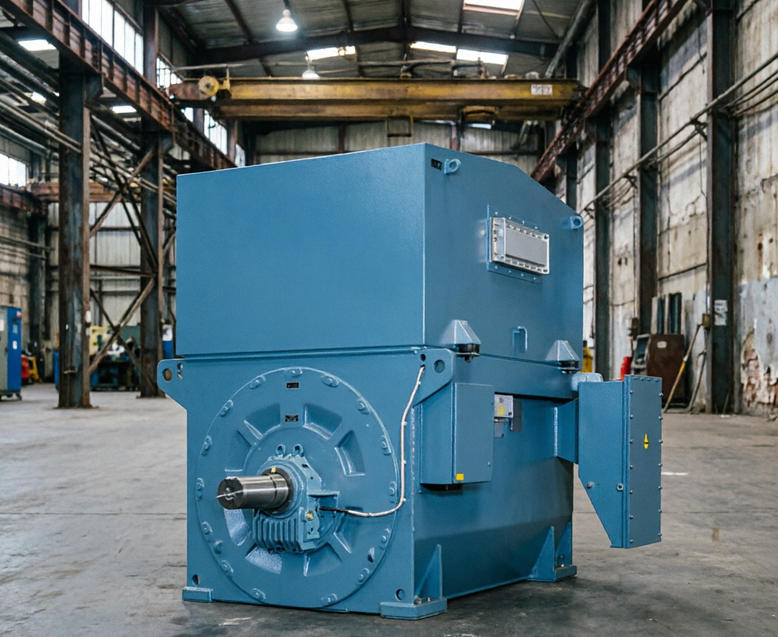
Squirrel Cage vs Wound Rotor Induction Motors: What is the Difference?
Both squirrel cage motors and wound rotor motors are types of induction motors. Induction motors are electric motors that operate by using electromagnetic induction to convert electrical energy into mechanical energy. They are widely used in industrial and household applications because they are simple, reliable, and efficient. The key difference between the two lies in the construction of their rotors.
Squirrel Cage Motor
The squirrel cage motor gets its name from its distinctive rotor design. The rotor consists of a cylinder of metal bars (typically aluminum or copper) that are shorted together at each end by rings of metal, forming a cage-like structure. The rotor is not connected to any external power source; instead, it is induced to rotate by the magnetic field created by the stator (the stationary part of the motor).
Squirrel cage motors are known for their rugged construction, low cost, and minimal maintenance requirements. Since there are no slip rings or brushes, there are fewer wearing parts, making them highly reliable even in harsh environments. They are the most common type of induction motor and are used in a wide variety of applications such as fans, pumps, compressors, and general-purpose machinery.
Wound Rotor Motor
In contrast, a wound rotor motor has a more complex rotor construction. Its rotor features three-phase windings (similar to the stator windings) that are connected to external slip rings and brushes. This design allows external resistors to be inserted into the rotor circuit, enabling control over starting torque and speed.
Wound rotor motors offer higher starting torque and better speed control compared to squirrel cage motors, making them ideal for heavy-load applications such as cranes, hoists, conveyors, and rolling mills. However, the presence of slip rings and brushes means they require more maintenance and are more expensive to manufacture.
Comparison Table: Squirrel Cage vs Wound Rotor
| Feature | Squirrel Cage Motor | Wound Rotor Motor |
|---|---|---|
| Rotor Construction | Aluminum or copper bars shorted by end rings (cage-like) | Three-phase windings connected to slip rings and brushes |
| Starting Torque | Moderate to low | High (adjustable via external resistance) |
| Starting Current | High (5–7× rated current) | Lower (2–3× rated current) |
| Speed Control | Limited (requires VFD) | Easier (via slip rings and external resistance) |
| Maintenance | Low (no brushes or slip rings) | Moderate to high (brushes and slip rings wear over time) |
| Cost | Lower | Higher |
| Efficiency | Higher | Slightly lower (due to additional losses) |
| Durability | Very robust, suitable for harsh environments | Moderate (slip rings and brushes are vulnerable) |
| Applications | Fans, pumps, compressors, general machinery | Cranes, hoists, conveyors, heavy industrial drives |
Summary
- Squirrel Cage Motors are the go-to choice for most applications due to their simplicity, low cost, high efficiency, and minimal maintenance. They are best suited for constant-speed operations where high starting torque is not required.
- Wound Rotor Motors provide superior starting performance and speed control, making them ideal for heavy-duty applications that demand high torque at startup or variable speed operation. However, they come at a higher cost and require more maintenance.
- The choice between the two ultimately depends on the specific application requirements: if simplicity and cost-efficiency are priorities, the squirrel cage motor is the better option; if high starting torque and speed control are needed, the wound rotor motor is the preferred choice.
