





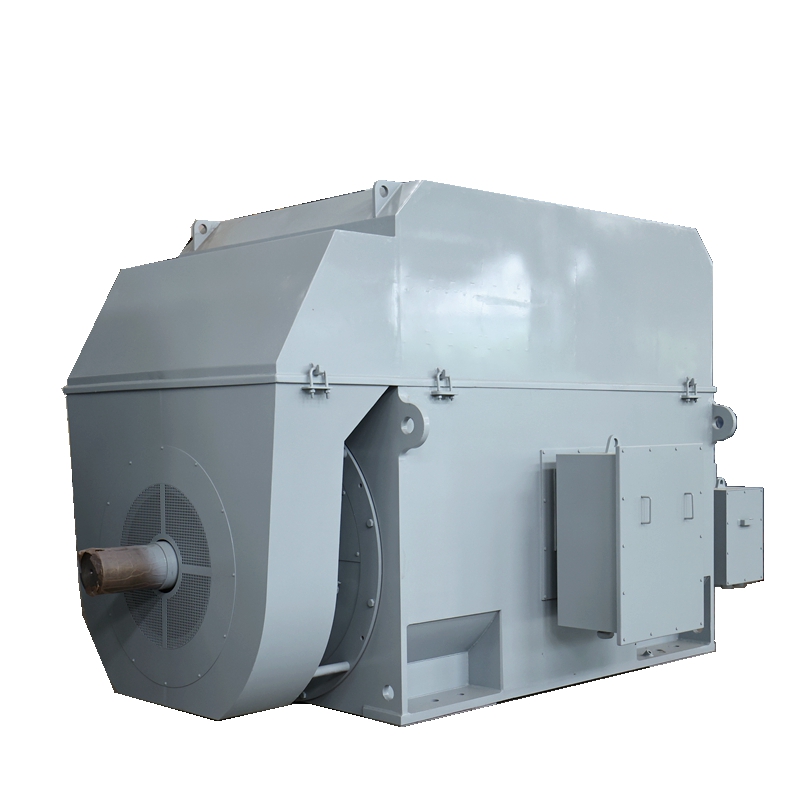
Permanent Magnet Motor vs Induction Motor: What Are Their Differences
At present, two primary motor types are widely adopted for commercialization in new energy vehicle applications: permanent magnet motors and induction motors. Permanent magnet motors are widely favored and heavily deployed by domestic new energy automakers, while induction motors see far less adoption. Their market share remains low not just locally, but across the global market.
So why do permanent magnet motors gain preference from numerous new energy and legacy automotive manufacturers? What sets permanent magnet motor vs induction motor apart? Synchronous Motor Manufacturers will break down the differences for you.
Should you have any inquiries regarding our products, please do not hesitate to get in touch.
Related Products
Slip ring motors
Large Synchronous Motor
Three phase asynchronous motor
Induction motor
Permanent Magnet Synchronous Motor
Permanent Magnet Synchronous Motor
Permanent Magnet Motor vs Induction Motor: What Are Their Differences?
- Structural Differences
In terms of construction, permanent magnet motors feature a more sophisticated structure and higher manufacturing cost compared with induction motors. Nevertheless, permanent magnet motors deliver advantages of smaller footprint and lighter weight.
A permanent magnet motor mainly consists of rotor, end cover and stator. Its stator shares a similar design with conventional induction motors. The rotor, however, adopts a distinctive structure fitted with high-performance permanent magnet poles. Once energized, these magnets create a rotating magnetic field.
An induction motor is built with two core assemblies: stator and rotor, plus auxiliary components including end covers and cooling fans. It is important to note that the stator of an induction motor acts as the armature, which draws power from the supply to produce the excitation rotating magnetic field.
- Differences in Operating Principles
For permanent magnet motors, permanent magnets provide excitation to form a synchronous rotating magnetic field. When the three-phase stator windings undergo armature reaction under this rotating magnetic field, balanced three-phase current is induced. In this state, rotor mechanical energy turns into electric energy, and the permanent magnet motor functions as a generator.
On the contrary, when balanced three-phase current is supplied to the stator, the three stator windings are spatially offset by 120 electrical degrees, producing a rotating magnetic field. Driven by electromagnetic force, the rotor’s magnetic field follows rotation. Electric energy is converted into rotor mechanical energy, and the permanent magnet motor operates as a driving motor.
For induction motors, symmetrical alternating current is fed into three-phase stator windings to generate a rotating magnetic field. This magnetic field cuts through the rotor windings and induces current within them. Current-carrying rotor conductors then produce electromagnetic force under the stator rotating magnetic field. This force creates electromagnetic torque on the motor shaft and spins the rotor following the direction of the rotating magnetic field. Contact us for further technical details.
When conductors cut magnetic flux lines within a magnetic field, induced current will be generated inside the conductors. The induced current interacts with the induced magnetic field to produce driving force and rotate the motor rotor.
Besides structural and operational distinctions, raw material selection is another key point separating permanent magnet motor vs induction motor. Permanent magnet motors rely on rare-earth permanent magnet materials such as neodymium iron boron. Rare earth resources are scarce across Europe and North America. By contrast, China holds around 70% of global rare earth reserves and contributes 80% of worldwide total production.
