





Motor Alternating Current: How Alternating Current Motors Work and Their Key Components
Fundamental Operating Principles of the Motor Alternating Current
The motor alternating current operates on the foundational principle of electromagnetic induction, converting electrical energy into mechanical motion through the interaction of magnetic fields. At the heart of this system lies the stator, the stationary outer component, which houses windings that, when energized by alternating current, generate a rotating magnetic field. This field moves at a synchronous speed determined by the supply frequency and the number of magnetic poles. The rotor, the rotating inner component connected to the motor shaft, interacts with this field without any direct electrical connection to the power source. In induction-type motors, the rotating stator field induces a voltage and current in the rotor windings, creating its own magnetic field that interacts with the stator’s field to produce torque. This inherent "slip," where the rotor rotates slightly slower than the synchronous speed, is essential for continuous torque generation. In synchronous motor alternating current designs, the rotor locks into the stator’s magnetic field, rotating at the exact synchronous speed, which is critical for applications demanding precise rotational consistency.
Classification and Structural Variants
Motor alternating current systems are broadly categorized by their power supply and rotor construction, each tailored to specific operational demands. Single-phase motors, typically powered by standard residential AC, are common in household appliances and light commercial equipment. Three-phase motors, utilizing industrial-grade AC power, dominate heavy-duty applications due to their superior efficiency, smoother operation, and higher power density. Within these categories, induction motors represent the most prevalent type, subdivided into squirrel cage and wound rotor variants. Squirrel cage rotors, constructed with aluminum or copper bars shorted by end rings, offer rugged simplicity and low maintenance, making them ideal for constant-speed applications like pumps and fans. Wound rotor motors, featuring windings connected to slip rings, allow for external resistance control, enabling precise adjustment of starting torque and speed, which is invaluable in high-inertia or variable-load scenarios. Synchronous motor alternating current units, including reluctance and hysteresis types, provide exact speed synchronization with the supply frequency, serving specialized roles in timing devices, recording instruments, and precision manufacturing equipment.
Starting Methods and Operational Control
Initiating a motor alternating current requires careful management of inrush current and mechanical stress, with multiple starting strategies available to match application requirements. Direct-on-line starters provide the simplest control but deliver full voltage and current at startup, suitable only for small motors or low-inertia loads. Star-delta starters reduce initial voltage by connecting stator windings in a star configuration during startup, then switching to delta for full-power operation, effectively limiting starting current to one-third of direct-on-line values. Auto-transformer starters offer adjustable voltage reduction through tap connections, allowing fine-tuned control of both starting current and torque. For wound rotor motors, rotor impedance starters connect external resistance to the rotor circuit via slip rings, gradually reducing resistance as the motor accelerates to provide smooth, high-torque starting. Modern soft starters use semiconductor devices to ramp voltage gradually, minimizing mechanical shock and electrical stress, while variable frequency drives enable comprehensive speed and torque control by adjusting both voltage and frequency, transforming motor alternating current systems into highly adaptable power solutions.
Component Architecture and Performance Characteristics
The stator and rotor form the core architectural elements of any motor alternating current system, with their design directly influencing performance, efficiency, and reliability. Stator windings, typically copper-wound and embedded in laminated silicon steel cores, are arranged in three-phase configurations spaced 120° apart to generate a balanced rotating magnetic field. The laminated construction minimizes eddy current losses, while the winding configuration—whether single-layer, double-layer, or concentric—affects electromagnetic waveform quality, noise levels, and starting characteristics. Rotor design varies significantly between types: squirrel cage rotors prioritize durability and cost-effectiveness, with cast aluminum or copper bars providing robust current paths, while wound rotors sacrifice some simplicity for enhanced controllability through their slip ring and brush assemblies. The interaction between these components determines critical performance metrics, including efficiency, power factor, starting torque, and speed regulation. Modern motor alternating current designs increasingly incorporate advanced materials, optimized cooling systems like IC411 self-fan cooling, and enhanced protection ratings such as IP54 to meet demanding industrial standards while reducing long-term maintenance requirements.
Industrial Selection and Procurement Considerations
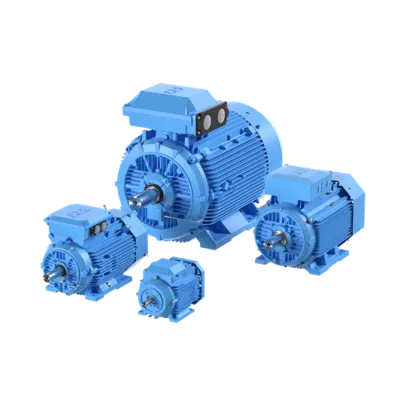
Selecting the appropriate motor alternating current for industrial applications requires balancing performance specifications, operational environment, and lifecycle costs. The Y2 series asynchronous motor exemplifies modern industrial design, offering a fully enclosed, self-fan cooled squirrel cage configuration suitable for general-purpose low-voltage applications. With center heights ranging from 80mm to 355mm, this series builds upon proven Y-series reliability while delivering improved power output, higher starting torque, and upgraded insulation class F for enhanced thermal endurance. The IP54 protection rating ensures resistance to dust and water spray, making it suitable for challenging industrial environments, while noise-reduced construction and IEC-compliant installation dimensions facilitate seamless integration into existing systems. For bulk procurement, this series represents a cost-effective solution that balances initial investment with long-term operational efficiency, reduced maintenance needs, and reliable performance across diverse industrial and commercial applications. When evaluating motor alternating current options, considerations should include duty cycle requirements, ambient operating conditions, speed control needs, and compatibility with existing power infrastructure to ensure optimal system performance and return on investment.
