





Electric Motor Efficiency: What It Is and How to Optimize It
The Fundamentals of Electric Motor Efficiency
An electric motor is a machine that converts electrical energy into mechanical energy through the interaction between magnetic fields and electric currents. Conversely, when this process is reversed, mechanical energy is converted back into electrical energy by a generator. Electromagnetism is the core phenomenon driving this operation. However, no machine is perfectly efficient. The performance of an electric motor is quantified by its efficiency, denoted by the symbol "η". Electric motor efficiency is defined as the ratio of the useful mechanical output power to the total electrical input power. Mathematically, it is expressed as:
Electric Motor Efficiency (η) = Output Power / Input Power
Because energy is always lost during the conversion process, the output is always less than the input. Efficiency can also be expressed in terms of losses: η = Output / (Output + Losses). Therefore, improving electric motor efficiency fundamentally comes down to minimizing these internal losses.
Strategies to Improve Electric Motor Efficiency
During the conversion of electrical to mechanical energy, electric motors incur various losses, including resistive (copper) losses, mechanical friction, and magnetic (iron) losses in the core. Several design and maintenance techniques can be employed to enhance electric motor efficiency:
1. Optimizing Heat Dissipation
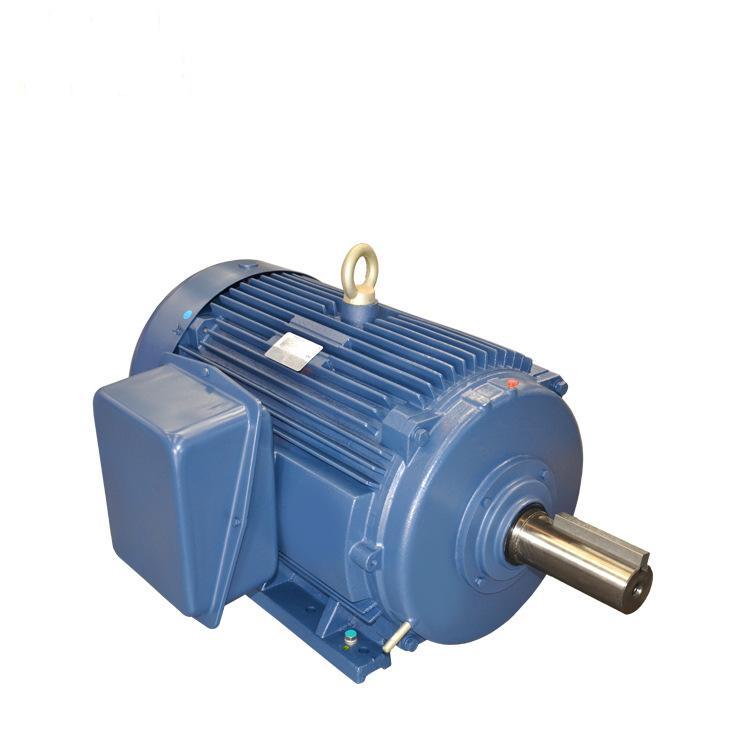
The motor frame provides mechanical protection and serves as the primary interface for heat transfer. It plays a vital role in thermal management by conducting the heat generated inside the motor to its outer surface, where a cooling fan promotes dissipation. Effective heat dissipation not only prevents overheating but also reduces thermal losses, thereby preserving the overall electric motor efficiency.
2. Enhancing Stator Design
The stator is responsible for a significant portion of an electric motor's losses. To reduce resistive losses in the stator windings, the mass of the copper must be increased, as a larger cross-sectional area reduces electrical resistance. High-efficiency electric motors typically contain about 25% more copper than standard models, which directly improves their efficiency rating.
3. Reducing Rotor LossesRotor losses are primarily caused by "slip" (the difference between the rotating magnetic field and the actual rotor speed). To minimize these losses, the slip must be reduced by increasing the electrical conductivity of the rotor. Utilizing high-conductivity materials like copper, and employing advanced manufacturing processes such as copper die-casting, are effective methods to boost electric motor efficiency.
4. Proper Lubrication Practices
Mechanical friction in bearings contributes to energy loss. The lubrication interval depends on the motor's rated speed, bearing size, grease type, and operating temperature. Care must be taken during maintenance; for instance, mixing different types of grease can severely degrade performance and negatively impact the electric motor efficiency.
5. Upgrading Core Laminations
To reduce core losses (hysteresis and eddy current losses), the stator and rotor cores should be constructed using high-quality electrical steel with a small amount of silicon, rather than low-cost carbon steel. Additionally, minimizing the thickness of the steel laminations while increasing the stack length helps reduce flux density and core losses, ultimately maximizing electric motor efficiency.
