





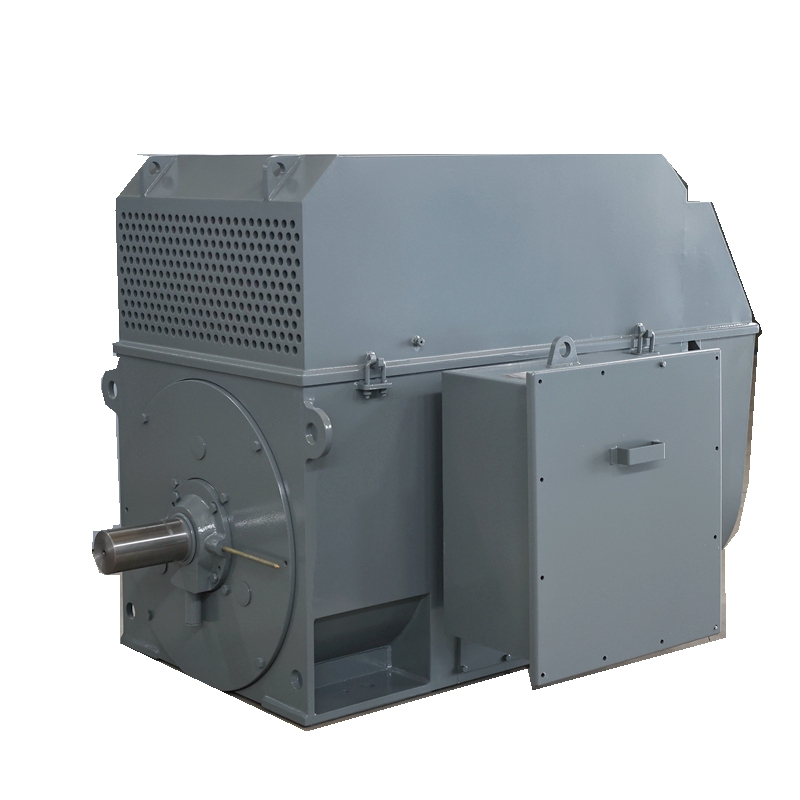
Efficiency of Electric Motors: Definition and Improvement Strategies
An electric motor generates driving force through the interaction between magnetic fields within its windings and electric current, thereby converting electrical energy into mechanical energy. When operating in reverse mode, a generator performs the opposite energy conversion, turning mechanical energy into electricity. Electromagnetic effects serve as the fundamental physical principle behind the operation of electric motors.
Definition of the Efficiency of Electric Motors
The efficiency of electric motors, symbolized as η, refers to the ratio of shaft‑mounted output power to input power, and acts as a key performance indicator for motor equipment. Its mathematical expressions are given below:
Efficiency of electric motors = motor output power / motor input power
Or η = output / (output + losses)
Losses are unavoidable for all electromechanical devices. For this reason, the output power of an electric motor is always lower than its input power.
Approaches to Boost the Efficiency of Electric Motors
Energy losses inevitably take place while electric motors convert electrical energy to mechanical energy. These losses cover resistive losses, friction‑caused mechanical losses, core magnetic dissipation losses, as well as additional losses related to material selection. Multiple technical approaches can be adopted to raise the efficiency of electric motors, as outlined in the following sections.
Thermal Dissipation Design
The motor frame provides mechanical protection for internal windings and serves as the mounting base. It also plays a decisive role in thermal performance: it transfers internally‑generated heat to the outer surface, where airflow from the fan carries heat away. Proper heat dissipation design helps cut thermal losses of the whole motor.
Stator Optimization
As a core component for large synchronous motors, the stator accounts for approximately 60 % of total motor losses. Increasing the mass of stator windings can reduce winding resistance and further suppress energy dissipation. High‑efficiency electric motors adopt windings with around 25 % more copper material than standard‑efficiency counterparts.
Rotor Improvement
Rotor‑related losses are secondary losses mainly resulting from motor slip. Such losses can be reduced by lowering slip values, which is realized by improving the electrical conductivity of rotor assemblies. Copper material with superior conductivity is widely applied here, and modern die‑casting copper techniques have been developed for mass manufacturing of copper rotors.
Bearing Lubrication Management
Recommended lubrication intervals depend on motor rated speed, bearing dimensions, grease type and operating temperature rise. Operators must exercise caution during lubricant filling. Different grease products cannot be mixed even if they share similar elemental composition. Mismatched grease mixtures will impair the performance of permanent‑magnet motors.
Optimized Lamination Sheets
Silicon‑alloy steel laminations, rather than low‑cost carbon steel, are deployed to mitigate hysteresis loss and magnetic saturation effects, so as to reduce core losses. Lower magnetic flux density and decreased core losses can also be achieved by reducing the thickness and increasing the length of laminations.
