





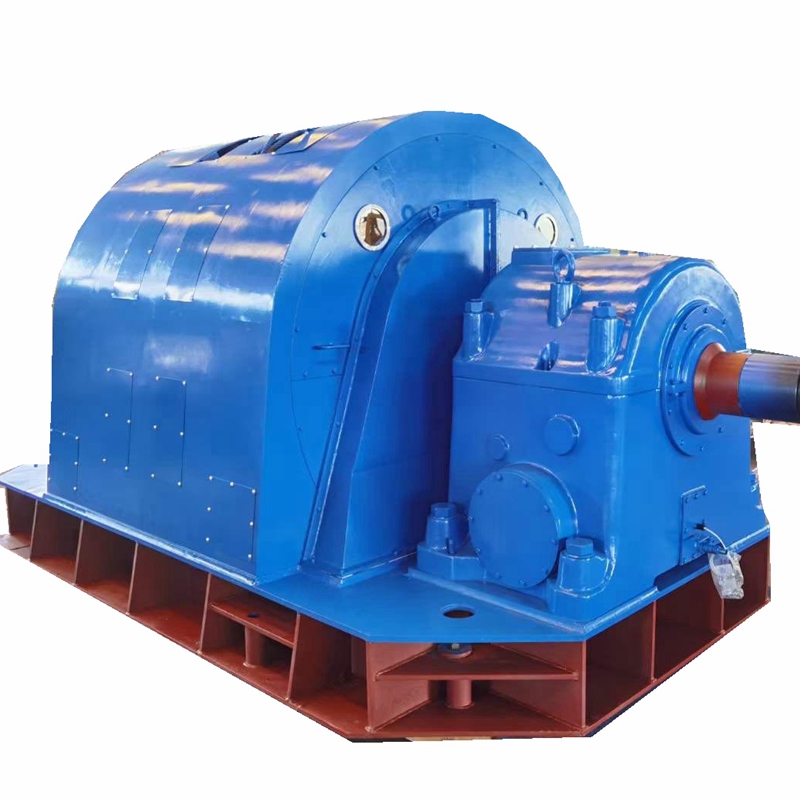
Alternating Current Motors: How They Work and Key Components
Alternating current motors are vital mechanical devices extensively deployed in industrial, commercial, and residential settings. Their basic structure consists of two core parts: a fixed outer stator and an internal movable rotor attached to the motor shaft. These two key components jointly produce rotating magnetic fields, which serve as the fundamental operating principle for alternating current motors. The stator generates its rotational magnetic field when alternating current flows through its built-in winding coils.
In alternating current motors, stator windings perform dual functions, operating simultaneously as armature windings and field windings. When alternating current voltage is applied to the stator, it produces a rotating magnetic field that runs at synchronous speed. This magnetic field induces voltage within both stator and rotor windings, enabling the motor to maintain normal operating status.
Types of Alternating Current Motors
Alternating current motors include multiple categories tailored for different working conditions, covering single-phase, three-phase, brake, synchronous, asynchronous, custom, and multi-speed models such as two-speed and three-speed motors. The major differences among these types stem from their applicable operating environments and power supply requirements.
Residential and civilian electrical systems usually adopt single-phase or double-phase power supply. In comparison, industrial production scenarios primarily utilize three-phase power, which creates a clear boundary between industrial-grade and household alternating current motors.
Most alternating current motors fall into the induction motor category, producing rotational torque via electromagnetic induction. The magnetic field generated by the stator induces current inside the rotor structure, and the electromagnetic interaction creates torque to drive mechanical rotation.
Starting Methods for Alternating Current Motors
Various starting techniques are applied to alternating current motors based on equipment types and application demands. These starting mechanisms adjust input power during startup to achieve stable operation and avoid electrical impact and mechanical damage.
Contactor or manual starters provide basic power control for alternating current motors. Contactors support automatic on-off power management, while manual starters allow operators to directly control power input through physical switches.
Star-Delta starters lower the instantaneous input voltage during motor startup. The stator windings are initially connected in star configuration to reduce starting current; after the motor accelerates to a stable speed, the connection switches to delta mode to permit full operating voltage.
Auto-transformer starters also limit startup current by reducing stator input voltage. The adjustable tap structure allows flexible modification of starting torque and current to match different operational requirements.
Rotor impedance starters connect to the rotor through slip rings and brushes. They maximize rotor resistance at startup and gradually reduce resistance as speed increases. Though reliable, this structure is relatively bulky and costly.
Soft starters enable gradual motor startup and shutdown, effectively lowering mechanical impact and equipment wear, making them ideal for scenarios that prioritize equipment protection and stable operation.
Core Components of Alternating Current Motors
Stator
The stator is the core component responsible for generating rotating magnetic fields, which determine the working performance of alternating current motors. It is composed of laminated metal iron cores, copper winding coils, and internal connecting structures. In three-phase alternating current motors, the internal three sets of windings are installed at a 120° interval. This structural design ensures continuous, stable magnetic field rotation and smooth motor operation.
Rotor
Different from DC motors, the rotors of alternating current motors do not connect directly to external power sources. Instead, they obtain driving power through electromagnetic induction from the stator’s rotating magnetic field. Three-phase induction alternating current motors mainly adopt two rotor structures: squirrel cage rotors and wound slip-ring rotors.
Squirrel cage rotors are assembled with aluminum or copper conductive bars and end rings. The changing stator magnetic field induces current in the rotor bars, generating electromagnetic torque to drive rotation. The rotor speed is always slightly lower than the stator synchronous speed, forming a speed difference called slip, which is a necessary condition for continuous motor operation. If the rotor speed fully matches the synchronous speed, electromagnetic induction fails, and rotation stops.
Wound rotors feature coil windings on laminated cylindrical cores, with wire terminals connected to shaft-mounted slip rings. Combined with external brushes, this structure enables adjustable rotor resistance, realizing precise control over motor speed and torque. Such adjustable performance makes wound rotor alternating current motors suitable for high-precision speed-regulation working scenarios.
Operating Characteristics of Different Rotor Structures
Squirrel cage alternating current motors rely on the continuous speed difference between rotor and stator magnetic fields to maintain operation. The rotor constantly attempts to track the rotating magnetic field, and the persistent slip ensures stable electromagnetic induction and continuous mechanical output.
Wound rotor motors belong to asynchronous equipment with inherent speed slip between stator and rotor. Adjustable slip parameters allow flexible regulation of magnetic field strength, torque output and rotational speed, providing high operational flexibility for complex industrial production demands.
Conclusion
Alternating current motors are highly versatile power equipment widely used in modern industries and daily life. By converting electrical energy into mechanical energy through electromagnetic induction, these motors deliver stable and efficient power output. Different types including single-phase household models and three-phase industrial induction motors can meet diversified application needs. The cooperative operation of stators and rotors guarantees reliable performance for various mechanical and electrical devices.
For bulk procurement demands, the Y2 series asynchronous motors with a center height of 80mm to 355mm offer excellent cost performance. This fully enclosed, self-fan cooled squirrel cage three-phase asynchronous motor is designed for conventional low-voltage industrial scenarios. Optimized on the basis of classic Y-series alternating current motors, the Y2 series features higher power density, greater starting torque, IP54 protection grade and Class F insulation, greatly improving operational reliability. Adopting noise reduction design and IC411 cooling mode, the product fully complies with IEC standards in terms of power parameters and installation dimensions.
With superior structural optimization, stable operation and low maintenance costs, the Y2 series alternating current motors serve as an efficient and economical bulk-purchase solution for industrial and commercial production equipment.
