





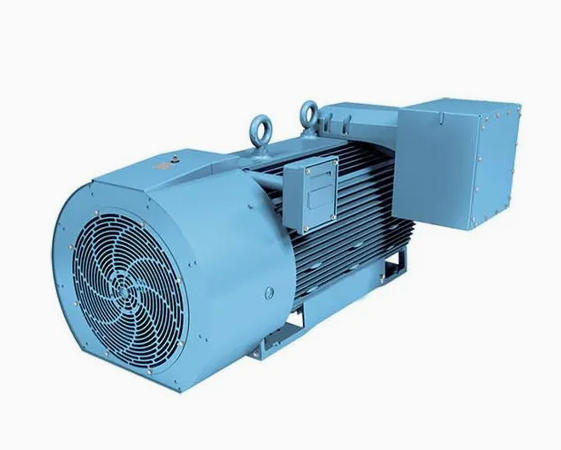
AC Electric Motors: Working Principles and Core Components
Core Operating Principles of AC Electric Motors
AC electric motors stand as a cornerstone of modern electromechanical systems, seamlessly converting electrical energy into mechanical motion across industrial, commercial, and residential sectors. At their core, these machines rely on the dynamic interplay between a stationary stator and a rotating rotor. When alternating current energizes the stator windings, it generates a rotating magnetic field that induces current within the rotor conductors. This electromagnetic induction creates the torque necessary for rotation, with the stator uniquely serving as both the armature and field winding to sustain continuous operation. The distinction between single-phase and three-phase power supplies fundamentally dictates their application, with single-phase motors dominating residential environments and three-phase configurations powering heavy industrial machinery due to their superior efficiency and torque characteristics.
Classification and Rotor Configurations
The classification of AC electric motors encompasses a diverse array of designs tailored to specific operational demands. While synchronous motors maintain a constant speed synchronized with the supply frequency for precision applications, induction motors remain the industry standard for their rugged construction and electromagnetic induction-based torque generation. Within the induction motor category, squirrel cage rotors offer simplicity and reliability for general-purpose use, while wound rotor configurations provide enhanced control over speed and torque through slip rings and external resistance. This versatility allows AC electric motors to adapt to varying load requirements, from the constant-speed demands of conveyor systems to the variable-torque needs of pumps and compressors, ensuring optimal performance across countless electromechanical systems.
Starting Methodologies and Control Strategies
Starting methodologies for AC electric motors are critical for managing inrush current and mechanical stress during initialization. Direct-on-line starting provides a straightforward solution for small motors but generates substantial current spikes that can destabilize power grids. Star-delta starters mitigate this by initially reducing voltage through a star configuration before transitioning to delta for full-power operation, though this method introduces torque fluctuations during switching. Auto-transformer starters offer more granular control by adjusting voltage taps to balance current reduction with adequate starting torque, while soft starters utilize thyristor-based phase control to deliver smooth acceleration profiles that minimize mechanical wear. For applications requiring precise speed regulation, variable frequency drives represent the most advanced solution, modulating both voltage and frequency to achieve seamless startup and energy-efficient operation across the entire speed range.
Structural Components and Electromagnetic Design
The structural integrity of AC electric motors hinges on the precise engineering of their stator and rotor components. Stators feature laminated iron cores with copper windings positioned 120 degrees apart in three-phase designs, creating a balanced rotating magnetic field while minimizing eddy current losses. Squirrel cage rotors consist of aluminum or copper bars short-circuited by end rings, generating torque through induced currents that inherently operate at a slip frequency relative to the stator field. Wound rotors, conversely, incorporate three-phase windings connected to slip rings, enabling external resistance adjustment to optimize starting characteristics and speed control. This fundamental design difference underscores the trade-off between the squirrel cage's maintenance-free simplicity and the wound rotor's enhanced operational flexibility.
Industrial Procurement: The Y2 Series Asynchronous Motor
For bulk procurement of industrial AC electric motors, the Y2 series asynchronous motor represents an optimal balance of performance and reliability. This fully enclosed, self-fan-cooled squirrel cage three-phase motor features an IP54 protection rating and F-class insulation, delivering superior starting torque and reduced noise compared to its Y-series predecessor. With power ratings spanning 0.18 to 315 kW and center heights from H80 to H355mm, the Y2 series meets IEC standards for installation dimensions while offering enhanced efficiency and durability for demanding applications. Its IC411 cooling system and optimized thermal design ensure consistent performance in harsh environments, making it an ideal choice for businesses seeking cost-effective, high-reliability AC electric motors for pumps, fans, compressors, and general industrial machinery. The Y2 series' combination of improved power density, reduced maintenance requirements, and proven operational stability positions it as a strategic investment for long-term industrial operations.