


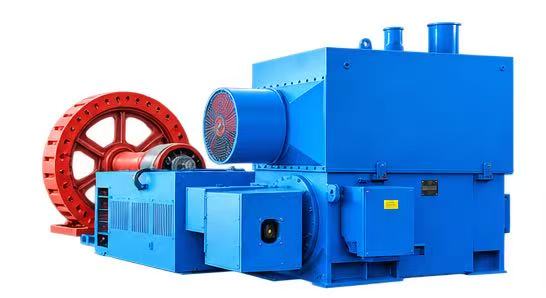
A Wound Rotor Induction Motor Is Used in Large Industrial Drive Applications
A wound rotor induction motor is used in high-voltage, heavy-duty industrial applications where reliable starting performance, stable operation, and flexible speed control are required. This type of motor adopts a box-type frame structure made of welded steel plate, offering light weight, good rigidity, and strong mechanical stability.
The stator uses a slide-in external press-fit structure, and the stator winding is insulated with Class F materials. The winding ends are firmly fixed and bundled to improve mechanical strength. During manufacturing, the motor undergoes inter-turn pulse voltage testing and ground voltage testing, and the windings are treated with a vacuum pressure impregnation solventless paint process. This provides excellent insulation performance, good mechanical strength, and strong moisture resistance.
The wound rotor is also insulated with Class F materials and treated with the same VPI process. The rotor welding joints and wiring are fully insulated. The slip ring and stator winding are arranged in separate spaces to prevent carbon dust from entering the winding area. The motor can be equipped with rolling bearings or sliding bearings, and the standard protection level is IP54. When a higher protection level is required, the bearing protection can also be upgraded.
The main outlet box is generally IP54 and is usually installed on the right side of the motor when facing the shaft extension end. It can also be installed on the left side according to customer requirements. A separate external grounding terminal is provided in the outlet box. A separate water cooling system is arranged on the top of the motor.
Main Parameters
| Item | Specification |
|---|---|
| Center height | H400–1000 mm |
| Power range | 200 kW–12,000 kW |
| Number of poles | 4 / 6 / 8 / 10 / 12 |
| Rated voltage | 6000 V / 6600 V / 10000 V / 11000 V |
| Rated frequency | 50 Hz / 60 Hz |
| Protection level | IP54 or IP55 |
| Insulation class | F |
| Duty | S1 |
| Cooling method | IC81W |
| Mounting | IMB3 |
| Connection | Y |
| Altitude | ≤ 1000 m The motor is suitable for environments where the ambient air temperature is between -15 °C and 40 °C, there is no serious dust, and there are no corrosive or explosive gases. Special versions can be designed for damp-heat or high-altitude conditions. |
Key Features
A wound rotor induction motor is used to increase starting torque while keeping the starting current relatively low. It is especially suitable for applications where the power supply capacity is limited, the starting time is long, frequent starting is required, or small-range speed regulation is needed.
This motor series offers high efficiency, energy-saving performance, low noise, low vibration, light weight, reliable operation, and convenient installation and maintenance.
Main Manufacturing Process
Stator: casing machining → punching → core assembly → coil manufacturing → binding → impregnation, painting, and drying.
Rotor: shaft blank machining → core pressing and installation → core casting/aluminum processing → rotor shaft assembly → binding → impregnation, painting, and drying → dynamic balancing.
Assembly: stator and rotor assembly → factory testing → surface painting → packaging and storage.
The manufacturing process follows standardized motor production requirements and uses high-quality energy-saving materials to ensure stable performance and long service lif
